Showing posts with label books. Show all posts

Sunday, 3 January 2016

Making it a positive 2016

One of my Christmas presents this year was Jamie Oliver’s new book, Everyday Super Food. As well as having some delicious-looking recipes, it also contains some advice for healthy living. One of the things recommended was the YOU-app for small steps in mindfulness, food and movement for health and happiness.

The basic idea is to make a positive change to your life through “micro-actions”, which are quick and simple to perform, rather than setting big goals that are hard to meet. The actions come in four flavours: mind, food, move and love. So far, I like it, and it’s inspiring me to make 2016 a year of making positive blog posts wherever possible. The first is this: check out the You app. It’s free!

Wednesday, 26 March 2014

20% off The Cabbages of Doom

Yesterday was apparently International Waffle Day, which sounds a bit made-up to me but is excuse enough for Lulu.com to have a 20% sale until the 31st of March. Just use WAFFLESSAY20 to get 20% off The Cabbages of Doom (just 80p!) or for some graphic entertainment, I can recommend Jesus ‘n’ Mo.

Thursday, 12 September 2013

A review of the "Instant Markdown" eBook from Packt Publishing

If you monitor my Twitter feed, you might have noticed that I was sent a free copy of a Instant Markdown eBook from Packt Publishing to review. I’d not come across Packt before but their general approach looks good - making DRM-free eBooks in multiple formats (once bought, you can get the ePub, PDF or Kindle versions) and paying some kind of royalty to Open Source projects that form the basis of their books. Despite time being a bit limited at present, learning more Markdown is potentially a big timesaver (as I use it a lot now) and it’s a short book, so I agreed.

Unfortunately, the book itself turned out to be rather disappointing. It was indeed quite short - a bit too short. The topics covered were themselves quite useful and it reminded me of a couple of things that I had previously noted to look up. The problem was that they did not really provide any insight that five minutes on Google or, in some cases, even the Markdown Wikipedia article would not match or beat. All too frequently, the content consisted of:

  • XXX: Read about it at <url>.

Screenshots, examples and even descriptions were sorely lacking. Just directing the reader to a website does not really seem enough to me. It’s the kind of thing I might do it my blog, or in a Markdown cribsheet, but not in a book, even an e-Book - especially one priced at £7.64. (Bizarrely, when there are screenshots they tend to be things like login screens, which is rather pointless.)

The lack of screenshots in the intro section could be forgiven as one of the best ways to learn Markdown is just to play with it and see for yourself what it does. Another criticism that I have, however, is that this eBook does not explicitly promote this approach: rather than starting with an online Markdown editor, such as Markable (or one of the other editors mentioned later in the book), the author begins by recommending the download of the official Markdown Perlscript and running it from the command prompt as a starting point.

The other reason that a different approach would be useful is that the book seems to assume a lot of HTML knowledge from the outset. Being a bit of a geek, I generally code my webpages in raw HTML - or, at least, I did before I discovered Markdown! - and so I recognised the HTML code that the Markdown was being converted into. People used to WYSIWYG editors might not be so familiar, especially with tags like <blockquote> and <code>. I am not sure at whom the book is aimed but it seems too superficial for geeks and yet too geeky for non-geeks.

Some of the more advanced features in the Top 8 features section are potentially useful but suffer from the superficial handling mentioned above. A few more screenshots or descriptions would have been useful for tools such as Scriptogr.am and writing Presentations - what do these things look like? Ditto the MultiMarkdown section. For example, the maths section for this is:

Math

Here is a math support example:

   \\[ {e}^{i\pi }+1=0 \\]

I don’t know about you but, at the very least, I would like to know what \\[ {e}^{i\pi }+1=0 \\] actually looks like when converted into HTML and opened in a web browser. For me, this really epitomises the book: it feels like it was lazily knocked out in an afternoon.

There were some useful things here - Pandoc is something I will be playing with and it was good to be reminded of it - but I’m not convinced that it is any more useful that one of the many Markdown guides that are kicking around for free online. (Some of these, almost ironically, are provided in “People and places you should get to know” section!)

The final problem that I had with this book was the lack of critical insight. It will, for example, give the basic code for embedding a picture in Markdown but fail to point out that it cannot be sized or aligned - to do this, you need to insert actual HTML. It will point to a few different tools but not really discuss the pros and cons of using an online versus local editor, for example. When giving the code for inline links ([text](url)) versus reference links ([text][ref][ref]: url), I expected it to point out that the former was clearer and safer if likely to be combining Markdown text from different sources (especially if using numerical references) whereas the latter is better if the same URL is being referenced multiple times. There was nothing like this. As someone who has largely picked up Markdown on the fly, I had hoped to pick up some useful tricks and tips and things to watch out for. I did not.

In summary, this is a handy reference guide to Markdown with some links out to some useful tools that themselves use Markdown. At £7.64, however, this eBook is not worth the money. More informative guides are freely available just a quick Google search away. (The documentation of free Markdown editors like Mou (Mac OSX) and MarkdownPad (Windows) is a good place to start for the curious.)

Thursday, 22 August 2013

Little Changes: teaching evolution, one rhyme at a time

Today, I was catching up with some old podcasts. One was the Naked Genetics podcast from last January, which featured a book that I had never heard of but sounded rather cute. It’s called Little Changes and was written by Dr Tiffany Taylor from the University of Reading as a way to introduce evolution (by Natural Selection) to under 11s - and their teachers. I’ve not got it - I don’t have any under 11s - but the preview on Amazon looks fun and the illustrations look sweet too.

I won’t reproduce any sample text here as it is all copyrighted but you can “look inside” on Amazon if you are interested. Apart from someone who (ambitiously) got it for their three year old, the customer reviews are good too.

Wednesday, 14 August 2013

Wallace was not forgotten and Darwin did not cheat him

A while ago, I watched - and really enjoyed - Bill Bailey’s Jungle Hero about Alfred Russell Wallace, the “co-discover of Natural Selection”. (I’m not sure why, like assassins of American Presidents, Wallace always has his middle name used.) It was an excellent two-part documentary in which Bailey retraces some of the steps of Wallace in his epic and life-changing - in fact, world-changing - expeditions through Borneo and Idonesia that resulted in the publication of his joint paper with Dariwn in 1858, On the Tendency of Species to form Varieties; and on the Perpetuation of Varieties and Species by Natural Means of Selection.

What annoyed me a little, however, was the degree to which the show seemed to buy into two legends about Wallace and his relationship with Darwin: (1) Wallace was forgotten whilst Darwin took all the credit, and (2) Darwin somehow cheated Wallace out his due recognition. As far as I can tell, neither is really the case.

Perhaps I have a twisted view of things as an evolutionary biologist but, even before this year’s activities in honour of the hundred years since his death, Wallace has not been forgotten. He is still lauded as a scientific hero among evolutionary biologists, with several key insights attributed to him. As well as a bunch of species, he has had geographical features named after him, including the Wallace Line and adjoining Wallacea, and is known as “the father of Biogeography”. There is a reason that Darwin is given more credit when it comes to evolution - he did come up with Natural Selection first and as it was the theory was largely ignored until On the Origin of Species was published. (It’s worth reading an interesting and informative post at Why Evolution is True by Greg Mayer, Why is Darwin more famous than Wallace?) But more credit to one does not equate to no credit to the other.

I’ve also never really understood the big deal about the chain of events that resulted in the 1858 joint publication. If, the story goes, if Wallace had only sent his idea direct to publication when he first had it rather than sending it to Darwin then it would have been just the Wallace theory of Natural Selection. (Except that Wallace did not use that term, so it probably would have been called something else.) Perhaps. But, equally, if Darwin had sent his theory for publication when he first had it, Wallace would never have thought of it because it would have already been a solved problem before he even went to Asia. It seems that Wallace is more lucky than unlucky to be heralded the "co-discoverer".

Then there is the even stronger claim that Wallace was not just unlucky, but that Darwin actively did the dirty and cheated him. Apart from the fact that this does not seem to fit with all the evidence that Darwin was an honorable and kind gentleman (included the friendship between Wallace and Darwin), I always thought that if he really wanted to do the dirty on Wallace then some “accident” could easily have befallen the letter.

Having said all that, I’ve not looked into it deeply and have often wondered whether it really was just anti-establishment conspiracy theories or whether there was more to it. I was therefore very interested to read John van Wyhe’s Guardian piece last Friday, Darwin did not cheat Wallace out of his rightful place in history. The title says it all really and you can (and should!) read the article if you are interested to know more - it’s not very long.

The reason why John van Wyhe’s viewpoint is so notable is that he is the founder and chief editor of the both the Darwin Online and Wallace Online websites and has studied the source material in depth. He has also just written a new book about Wallace, “Dispelling the Darkness:Voyage in the Malay Archipelago and the Discovery of Evolution by Wallace and Darwin” - you can read a review in another WEIT post. It looks interesting.

Monday, 29 July 2013

Making e-Books with Wikipedia

One of the many interesting things that I learnt at the recent iPad training course was not actually iPad-specific: generating e-Books with Wikipedia for offline reading.

Hidden away in plain site on every page is the Print/export section. One option is to simply Download as PDF but a far more interesting and useful possibility exists: Create a book.

Clicking the Create a book link will open up the Wikipedia Book creator, with the option to start a book with the current page or create an empty book.

Once you Start book creator, you then get an Add this page to your book button on each page you visit.

Alternatively, you can right-click and Add linked wiki page to your book to add pages without visiting them. (This is great for those people - everyone? - who gets easily side-tracked by links within Wikipedia pages.)

If you have got yourself a bit side-tracked by adding pages, or just need some inspiration, you can also get Wikipedia to Suggest pages:

Once you have finished adding pages - or want to remind yourself what pages you have added - you can click on Show book and Manage your book. This allows you to rearrange (or delete) your pages and download your book when ready. There are a few options but the best is probably e-book (EPub) format for iBooks.

After selecting a format, click Download and Wikipedia will render the book. Once ready, you can download the file. If doing this on a iPad, you can Open in iBooks, otherwise save it to Dropbox or something and open it in iBooks that way. You then handily have all of the Creative Commons content to read off-line, complete with a nice linked table of contents.

The nice thing about this format is that text will adjust as it is resized etc. Any links between Wikipedia pages that are in your e-book will be included and enable internal navigation. Likewise, any external URL links are kept. Links to Wikipedia pages that are not in the book are not included (i.e. there will not be lots of links out to Wikipedia webpages).

Because any copyright-protected content is not included, the e-book should be OK to distribute - but you will probably want to double-check that before doing it!

Thursday, 11 July 2013

Hugh's pasta with new potatoes, green beans and pesto - a one pot classic!

We’re fans of Hugh Fearnley-Whittingstall’s River Cottage Veg Every Day cookbook in our house and yesterday saw another fine discovery from within its hallowed pages. If you are after something quick, easy and delicious, look no further than Hugh’s “Pasta with new potatoes, green beans and pesto”.

As the name suggests, the main ingredients are new potatoes (about 75g per person), pasta (about 75g per person), green beans (about 50g per person) and pesto. He has instructions to make your own pesto but we just used Sacla and it was delicious enough. The final ingredients are a handful of green olives, a good grating of parmesan and a healthy dose of black pepper.

One of the best things about this recipe for me is that it is all cooked in one pot and can be prepped at a leisurely pace as you go. Simply set a large pan of salted water boiling and chop the spuds while you wait into “thin chip” sized pieces. Bung in to boil with the pasta (10-12mins) and chuck in the green beans about 4 minutes from the end after trimming and halving them. Drain, allow the steam to evaporate for a couple of minutes and then mix in the pesto and season with black pepper to taste.

To finish off, roughly chop the green olives and sprinkle on top, followed by some parmesan. Delicious! (And only one pot to clean!)

Monday, 10 June 2013

Python in a Nutshell - free PDF available!

If you are a Python programmer, you might be interested to know that you can get a free PDF of Python in a Nutshell, 2nd Edition from IT ebBooks. It's a few year's old now but still has a lot of useful basic Python syntax. It doesn't cover Python 3, so if you are a newbie you might want to hunt down some specific advice about programming Python 3 compatible code in Python 2.7. (To be honest, I still haven't plucked up the courage to look at the Python 2 vs. Python 3 difference myself but it might be worth having a go at the Python 3 tutorial.)

Wednesday, 5 June 2013

Six useful things I have learnt at Software Carpentry boot camp

Monday and Tuesday this week, I attended a Software Carpentry boot camp at the University of Southampton. Topics covered included bash, shell scripting, Git and writing/testing reproducible code. The event was well-attended and whilst making an event like this relevant to everyone is obviously a challenge, they did a great job. I certainly learnt some useful tips even for the topics that I knew a fair bit about.

As well as the SWC presentations themselves, it was good to get tips from fellow programmers as well as "UNIX and Perl to the Rescue!: A Field Guide for the Life Sciences (and Other Data-rich Pursuits)", which I brought along for some browsing. Here is half a dozen random things that I picked up over the two days...

1. Useful grep flags. I've used grep to pull out matches from text files a fair amount and was familiar with a few of the flags that I use a lot:
-i = case-insensitive search
-v = inverse search
-A n = return n lines after match
-B n = return n lines before match
I learnt a few more useful ones, though:
-w = match whole words only
-n = show line numbers
--color = highlight matches in colour
-r = search subdirectories (recursive)
2. Useful ls flags. ls is another must-have part of the UNIX users toolkit. There were still a few useful flags with which I was unfamiliar and am likely to use in future, though:
-G = colour-code directory contents
-F = appends / to directories
-R = recursive ls including subdirectory contents
-1 = one entry per line
-a = show all files including hidden files
Along with my old favourites, of course:
-l = "long" mode (more info)
-r = reverse sort
-t = sort by time
-S = sort by size
-h = user-friendly file sizes
3. Catching the standard error and standard output. I've seen this a few times but for some reason this was the first time it really sunk in. Most UNIX users will be familiar with redirecting the standard output from a command into a file using > file (or >> to append). Catching the standard error is less obvious/common. This can be done using 2> to catch the stderr alone, or &> to catch both stdout and stderr at the same time. If you want to redirect them both into different files, do something like this:
[cmd] 2> error.txt > stdout.txt
The stdout will slip by the first redirect and then get caught by the second. Of course, you can have those the other way round if you wish!

4. Navigating the terminal. This one actually came from "UNIX and Perl to the Rescue" but I discovered it at the boot camp:
Ctrl+a = move to start of line
Ctrl+e = move to end of line
Ctrl+w = delete previous word
Ctrl+l = clear screen (clear works too)
Ctrl+r = search through previous commands one letter at a time (this was an SWC revelation)
Using Ctrl+a and Ctrl+e seems to work in a number of other Mac editors too - including this blogger HTML window! If you are a Mac user, just make sure that you don't use cmd+w by mistake - this will close the current terminal window with much wailing and gnashing of teeth!

5. Reversing Python strings. In the past, I have reversed a python string by converting into a list, using the list.reverse() method and then string.join() to convert it back. But there is a better way!
string[::-1]
I've used string slicing loads before but never realised that you could add a step to this syntax as with the range() method! (string[::-1] translates as string[start=end:end=start:step=-1].) Now I am wondering where else in my code I can use this knowledge!

6. Changing the command prompt to $. Sometimes, the command prompt is too long (or the terminal window too narrow) so that almost every command wraps around in an annoying fashion. To replace with a simple $ character, just type:
PS1="\s"
PS1="\$ "

I must admit that I do not (yet) really understand exactly what this does and how it works but it does! (And if you now get lost as to where you are, just remember that pwd gives you the full path to the working directory.

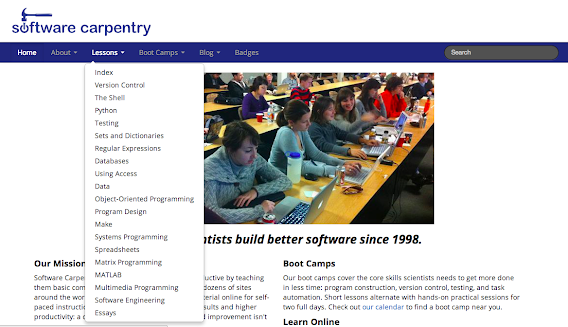
There were more but I think that's enough for now! If this is the sort of thing that floats your boat, you can find useful stuff like this plus a whole bunch of lessons at the Software Carpentry website:

If you get the chance to attend a boot camp yourself, my advice is: do!

Tuesday, 12 March 2013

Tiramisu - the ultimate dessert for entertaining?

My parents-in-law are over to visit for a few days and they always feed us well so we wanted to make something a bit special for dinner. My wife made a lovely Jamie Oliver recipe, roasted butterflied leg of lamb with chickpeas, yoghurt and tray-roasted veg (courtesy of my sister-in-law), and I was on dessert duty. This is unusual for me, as my wife is the baker in the household, but I fancied having another bash at the tiramisu recipe I had (successfully) made a few years previously from The Food of Italy: A Journey for Food Lovers.

Tiramisu is pretty easy to make and, useful when entertaining, can be made almost entirely ahead of time - indeed, it actually benefits from a bit of time in the fridge for the flavours to soak and develop. It also doesn't involve any cooking and, being entirely made of yummy ingredients, it's probably quite hard to actually make it taste bad. The Tiramisu I made was slightly modified from the book:
5 eggs (separated)
170g caster sugar
300g mascarpone
250ml cold strong coffee
3 tbsp Amaretto
Enough sponge fingers for two layers (approx. 36)
40-80g dark chocolate
The recipe says "serves 4" but I would say this serves 6-8! It's quite simple. Separate the eggs and beat the yolks with the sugar until it's smooth and then beat in the mascarpone, again until smooth. In another (very clean) bowl, beat the egg whites until they make soft peaks. (The transformation of egg whites during beating has to be one of cooking's wonders - made no less wonderful because we understand the science behind it.) Then fold the egg whites into the yolk/sugar mix.

Then it's time to assemble. Get a square dish (approx. 25cm x 25cm) to make the Tiramisu in and another shallow dish for dunking the sponge fingers, into which mix the coffee and Amaretto. The original recipe uses brandy or sweet Marsala wine and I've had a delicious alcohol-free version (made by an Italian), so there is some flexibility here.

To assemble, take sponge fingers, dunk them in the coffee to soak some up and cover the bottom of the dish in a single layer. You want to plan to soak up about half of the liquid. I was a bit stingy with the first layer. It worked out fine in the end but you can always make more coffe, so it might be worth being bold with your soakage if in doubt. (Just don't soak up enough to risk the integrity of your sponge fingers.) If your dish an awkward size/shape, I would encourage a (literal) dry run, as once you have placed a coffee-soaked sponge finger, you won't be able to move it. Cover the layer of sponge fingers with half of the egg/mascarpone mix. Repeat with another layer of coffee-soaked sponge fingers. If you have too much coffee/booze mix left, you can gently spoon some more over the fingers to let them soak up some more. (I did this as I had quite a bit left. It's impressive how much they can soak up!) Spread the rest of the egg/mascarpone mix on top and smooth.

At this point, you can cover with clingfilm and put in the fridge for a few hours, or overnight (or eat it straight away). When it's time to serve, grate the dark chocolate over the top for a generous covering. The recipe said 80g but this seemed rather excessive for the size of dish that I had. I only used about 40g in the end, which gave a good covering and so I stopped grating due to a combination of laziness and impatience! When dished up, it did look a bit stingy, so I would probably recommend about 60g for next time.

Yummy!

Monday, 18 February 2013

A bit more than Three Good Things on a Plate - Mushrooms, scone and soured cream recipe

I'm a bit of a fan of Hugh Fearnley-Whittingstall's cookbooks and we have a few of the River Cottage series. I've blogged before
about Veg Every Day
. I also got The River Cottage Meat Book for Christmas and one of my New Year's Aspirations was to cook more/better meat. I've not yet been able to do that but the veg
front has been more successful and this weekend saw another Hugh Fearnley-Whittingstall veg recipe triumph.

This one was not from Veg Every Day, though. Another Christmas present this year was Hugh's Three Good Things, which features recipes predominantly consisting of "three good things on a
plate". I think there is a bit of artistic license here, to be honest, as the recipe I made yesterday - Mushrooms, scone and soured cream - had considerably more then three things in it, although I guess that the "mushrooms" is really short for "mushroom stew". The stew was then topped with a cheese scone mix and baked in the oven, like a cobbler.

I'd never made a cobbler-style dish before and I haven't made scones for years - I'm not the baker in our house - so I was a bit nervous but it turned out pretty well, despite a couple of mistakes on my part. A "rustic" finish but exceptionally tasty and well recommended. The third "good thing" - soured cream - was just for serving.

I'm a big fan of mushrooms and they really are the star of this dish (although the scone topping was pretty fine too). The key, as ever with mushrooms, is to cook them for quite a long time to really concentrate their shroomy goodness. A healthy glug of red wine added to the richness of the dish further. We went for a very palatable Aussie McGuigan Bin No. 736 Shiraz Viognier blend, and a fine accompaniment it was too.

A dish this hearty and tasty does not need much on the side dishes and some simple stir fried savoy cabbage with a touch of soy sauce was great. Thanks to signing up with Abel & Cole, I think that more tasty River Cottage veg dishes are in our future.

Wednesday, 13 February 2013

Some Darwin quotes for Darwin Day

Today is Darwin Day, so why not visit DarwinDay.org and see if there are any activities in your area? Alternatively, you can follow Darwin's adventures on HMS Beagle in blog or tweet form. I've been reading the blog of his diary but I think he was too seasick to mention his birthday in the entry for 12th Feb 1832:
There has been a little swell on the sea to day, and I have been very uncomfortable: this has tried and quite overcome the small stock of patience that the early parts of the voyage left me. Here I have spent three days in painful indolence, whilst animals are staring me in the face, without labels and scientific epitaphs.
Of course, another great Darwin Day activity is to read/browse On the Origin of Species by Means of Natural Selection, or the Preservation of Favoured Races in the Struggle for Life? As well as the PDF linked there, you can also get it free on the Kindle. I've not read it for some time but whenever I dip into it I am struck by how much he seemed to understand the process of Natural Selection despite no one having a clue at that stage about the biology underlying heredity.

The term "Natural Selection" comes in for some criticism because, it is argued, there is no real selection taking place. Nature is not actively picking and choosing - it is a passive selection process. Such criticisms are, I think, ill-founded and usually just a semantic ploy born out of desperation when faced with the inescapable reality that Natural Selection is very real. When you read the Origin, it seems clear to me why Darwin chose the term "Natural Selection":
"From these considerations, I shall devote the first chapter of this Abstract to Variation under Domestication. We shall thus see that a large amount of hereditary modification is at least possible, and, what is equally or more important, we shall see how great is the power of man in accumulating by his Selection successive slight variations. I will then pass on to the variability of species in a state of nature ... As many more individuals of each species are born than can possibly survive; and as, consequently, there is a frequently recurring struggle for existence, it follows that any being, if it vary however slightly in any manner profitable to itself, under the complex and sometimes varying conditions of life, will have a better chance of surviving, and thus be naturally selected. From the strong principle of inheritance, any selected variety will tend to propagate its new and modified form." [Introduction]
This is still a good summary of the general principle and process of Natural Selection even in 2013. Darwin recognised that Artificial Selection and Natural Selection are essentially the same thing. We have filled in a lot of the details but Darwin really did get the basics largely right, which is one of the reasons he is still honored by evolutionary biologists. It is re-stated more clearly in Chapter XIV, Recapitulation and Conclusion, in a way that I like because it really lays out the challenge that stands before Creationists to this day - how could Natural Selection not happen?:
"If then we have under nature variability and a powerful agent always ready to act and select, why should we doubt that variations in any way useful to beings, under their excessively complex relations of life, would be preserved, accumulated, and inherited? Why, if man can by patience select variations most useful to himself, should nature fail in selecting variations useful, under changing conditions of life, to her living products? What limit can be put to this power, acting during long ages and rigidly scrutinising the whole constitution, structure, and habits of each creature,--favouring the good and rejecting the bad? I can see no limit to this power, in slowly and beautifully adapting each form to the most complex relations of life. The theory of natural selection, even if we looked no further than this, seems to me to be in itself probable."
And similarly in Chapter IV, Natural Selection:
"Can the principle of selection, which we have seen is so potent in the hands of man, apply in nature? I think we shall see that it can act most effectually. Let it be borne in mind in what an endless number of strange peculiarities our domestic productions, and, in a lesser degree, those under nature, vary; and how strong the hereditary tendency is. ... Let it be borne in mind how infinitely complex and close-fitting are the mutual relations of all organic beings to each other and to their physical conditions of life. Can it, then, be thought improbable, seeing that variations useful to man have undoubtedly occurred, that other variations useful in some way to each being in the great and complex battle of life, should sometimes occur in the course of thousands of generations? If such do occur, can we doubt (remembering that many more individuals are born than can possibly survive) that individuals having any advantage, however slight, over others, would have the best chance of surviving and of procreating their kind? On the other hand, we may feel sure that any variation in the least degree injurious would be rigidly destroyed. This preservation of favourable variations and the rejection of injurious variations, I call Natural Selection. Variations neither useful nor injurious would not be affected by natural selection, and would be left a fluctuating element, as perhaps we see in the species called polymorphic."
The other great thing about this paragraph is the last line. Another unfair criticism leveled at "Darwinists" is the idea that we think that Natural Selection explains everything. It never has and never will. Right from the outset, Darwin alluded to what we now know as Random Genetic Drift - the "fluctuating" evolution of neutral variants in traits that are "neither useful nor injurious".

Another thing that stands out is how little Creationist arguments against Natural Selection have progressed in the last 150 years. Like the good scientist that he was, Darwin outlined a number of potential difficulties to his theory. In the final chapter, however, he summarises the objections thus (my emphasis):
"Such is the sum of the several chief objections and difficulties which may justly be urged against my theory; and I have now briefly recapitulated the answers and explanations which can be given to them. I have felt these difficulties far too heavily during many years to doubt their weight. But it deserves especial notice that the more important objections relate to questions on which we are confessedly ignorant; nor do we know how ignorant we are. We do not know all the possible transitional gradations between the simplest and the most perfect organs; it cannot be pretended that we know all the varied means of Distribution during the long lapse of years, or that we know how imperfect the Geological Record is. Grave as these several difficulties are, in my judgment they do not overthrow the theory of descent with modification."
Creationists and Intelligent Design Creationists still go after these zones of ignorance. The big difference is that we often now have a very good idea of "how ignorant we are" and can say with great confidence that the remaining objections "do not overthrow the theory of descent with modification" and are, indeed, wholly consistent with it.

Wednesday, 2 January 2013

New Year's Aspirations for 2013

I'm not a great believer in New Year's Resolutions. After all, if there's something you should change in your life, do it when you realise it, don't wait until the end of the year. There is also the potential issue of self-recrimination etc. if you fail to keep them.

At the same time, it is useful to reflect on stuff from time to time and New Year provides a good time for this and plenty of time sitting around to think about it too! I can't say I've given it a lot of thought but I did think it would be worth penning a few New Year's aspirations. (Not because its anyone else's business, of course, but I do think I am more likely to do something if I've publicly stated it - not that it worked with the gym!)

☑ Make more time for reading. I made a quite long Christmas reading list of interesting papers and stuff but did not do a very good job at getting through it and it's back to work tomorrow. I also got a few books for Christmas, which all look good. I'm also behind with work-related reading. Must. Read. More.

☑ Make more time for writing. I've got a few papers and a book chapter that need writing. Episodes of Mystic Mog and the Exploding Tortoise have also been decreasing in frequency down to a disappointing 4 in December. There are a number of contributing factors to this but one is clearly not setting aside time to write.

☑ Blog more papers. Although this is not specifically a science blog per se, one of the motivations behind blogging was to try and get better at science communication. The number of science-related posts is not too bad (about 1 in 3) but I could definitely do with blogging a few more original papers, which will hopefully also help with the reading and writing.

☑ Cook more meat. I don't intend to eat more meat. I'm never going to be vegetarian for a number of reasons but nor do I see the need to eat meat every day and tend to cook quite a lot of vegetarian meals. When I do cook meat, however, it tends to be safe recipes erring on the side of boring. This is largely because I lack experience and the confidence that comes with it. One of this year's Christmas presents was The River Cottage Meat Book and I intend to make good use of it!

☑ Budget. I don't consider myself particularly irresponsible with money but there is always room for improvement. I've got reasonably good of keeping track of my expenses in 2012 but 2013 is time to convert that knowledge into some proper budget planning. Maybe.

☑ Gain control of my inboxes. I had a bit of a purge a while back but my email is still swamped by loads of junk mail. Time for another purge, I think. I think it's also time to try and make Facebook more active and less passive - it's actually easier to keep track of messages in FB than email sometimes. Unless I really get my inbox in shape, that is.

Not the most inspiring list (or interesting post!) in the world but it will be interesting (for me) to revisit these in a few months and see what progress I am making. It doesn't hurt to have aspirations.

Monday, 12 November 2012

The Cabbages of Doom 2.2

A new edition of The Cabbages of Doom is now available on the Kindle for only 99p (or $1.59). Thanks to some editorial advice (thanks, Karen!), a few grammatical errors and typos have been fixed here and there. It also features a new cover. Following some changes at Amazon Kindle Direct Publishing, it can be lent too. (Though only in America, I think.) The iBooks and Lulu versions will be updated when time and energy allows. (Unless I discontinue them and enrol in "KDP Select".)

If you are curious, visit Amazon to download a free sample, read the blurb or view the sample chapter (PDF). If you need more encouragement, here it's one review so far (for the Lulu PDF version, which is yet to be updated):
★★★★★

This exciting and entertaining first novel exceeded all of my expectations. The story itself is a very imaginative chase across the English country side involving inter-dimensional travellers culminating in an entirely unpredictable hilarious and action packed final confrontation. The story had me laughing out loud and genuinely invested in routing for the good guys (okay, cabbage and small animals). Unlike most self-published first novels in this price range this one was very well spell-checked and surprisingly grammatically correct. If you are in the mood for a smile, a fun story and groan or two for some amazing puns and references to classic films, then this is the best 99p you can spend.
Go on. You'll make my day.

Wednesday, 24 October 2012

20% off The Cabbages of Doom!

Blogging has taken a back seat over the past few days because I have been in Lucca for a family wedding, where there was considerably better access to wine than wifi! More on Lucca later but for now just a quick plug: 20% off The Cabbages of Doom (and everything else at Lulu.com)!

Tuesday, 16 October 2012

25% off at Oxford University Press for Biology Week

Oxford University Press have some special Biology Week content on their website, including 25% off all Biology titles (with free P&P over £20) so now's the perfect time to get that popular science book you'd been coveting. (Or a textbook if you're feeling more hard-core.) The promotion is actually running until the end of December 2012 so might be good for Christmas presents too!

Wednesday, 3 October 2012

Are big pharma companies worse than homeopaths?

Ben Goldacre is well known for busting Bad Science and promoting evidence-based medicine. His latest book, Bad Pharma, goes beyond quackery and takes on Big Pharma, highlighting what are down-right dangerous practices in the industry. I haven't read the book but his recent article about it in the Business section of the Guardian, "The drugs don't work: a modern medical scandal", makes scary reading. You can also hear him talk about it in a recent Nature Podcast Extra.

It's common knowledge that Homeopathy is pure placebo and literally has no active ingredients. The danger of homeopathy is not that it will do you any harm - there is nothing in there to do any harm - but rather that people will be conned into using Homeopathy in place of treatments that could actually cure them. (Not all conditions can be treated effectively with a placebo and some drugs out there genuinely do work better than placebo.)

The same is not true of drugs. (Or herbal remedies for that matter.) They contain an active ingredient and therefore there is the very real potential for harm as well as the very real potential for an actual positive effect. It is therefore much worse to find out that Big Pharma companies are playing games with the clinical trials and evidence on which doctors base their treatments.

Big Pharma, Homeopaths and woo merchants are all in the business of making money and so it is perhaps not surprising that they use some of the same tricks to sell their wares but what is surprising (to me) is the extent to which the law lets them get away with it and regulating authorities are apparently powerless to do anything about it. Although it does nothing to undermine the need for evidence-based medicine, it massively undermines the access to evidence-based medicine - if the evidence the doctors get access to is hidden or distorted then what's the point?

It's a pretty stark picture. Indeed, Ben Goldacre starts the book thus:
"Medicine is broken. And I genuinely believe that if patients and the public ever fully understand what has been done to them - what doctors, academics and regulators have permitted - they will be angry... I'm going to tell you how medicine works, just over the page, in one paragraph that will seem so absurd, so ludicrously appalling, that when you read it, you'll probably assume I'm exaggerating."
Before I get to that paragraph, I would say that there is at least one other group that will be (and are!) angry - other academics. I am one! I am angry as both a sometimes patient and a scientist. (And, when it comes to medicine, a member of the public!)

The reason this angers me as a scientist are two-fold. First, the trivially obvious reason: such flagrant abuses of methods that are supposed to provide objective evidence not only undermine public faith in medicine but they undermine faith in science as a whole. (Not, sadly, that non-medical science is immune to these abuses but they generally seem to get identified by other scientists, who are all skeptics by nature, and rarely have the same capacity for harm.) The second reason is that it is not just doctors and patients that use these data. There is a lot of effort being put into mining existing drug actions and side effects to identify novel treatments (e.g. "network medicine") - often by people who do not stand to make money from the discovery. The weakness with all of these approaches is that "rubbish in, rubbish out" and if the pharma industry is systematically sabotaging the data that the scientific community are using for such endeavours then a lot of good scientists are wasting valuable time and money, not to mention missing important connections that could result in genuine treatments.

But now for that paragraph. You can read the full paragraph using Amazon's Look Inside feature but here's a taster:
"Drugs are tested by the people who manufacture them, in poorly designed trials, on hopelessly small numbers of weird, unrepresentative patients, and analysed using techniques which are flawed by design, in such a way that they exaggerate the benefits of treatments. Unsurprisingly, these trials tend to produce results that favour the manufacturer. When trials throw up results that companies don't like, they perfectly entitled [legally, not morally - RJE] to hide them from doctors and patients, so we only ever see a distorted picture of any drug's true effects. Regulators see most of the trial data, but only from early on is a drug's like, and even then they don't give this data to doctors or patients, or even to other parts of government. This distorted evidence is then communicated in a distorted fashion..."
The rest of the paragraph - and, judging by the intro, the book - is not much cheerier. It's no wonder he says that Medicine is broken. When I am feeling brave, I think I will order a copy for my kindle.

Nevertheless, I think there is something worth pointing out or reiterating: this is a problem of implementation, not theory. It is not that drugs cannot or do not work - some do and we have well-designed and well-executed studies that show this. (Generally, the older ones, when Pharma was not so desperate or, perhaps, cynical and there was more low-hanging fruit.) It is not that medicine should not be evidence-based or that we do not have methods for gaining that evidence. This does most emphatically not mean that homeopaths and woomeisters were right all along. The fact that some of their conspiracy theories have a semblance or truth about them does not mean that their pseudoscientific nonsense suddenly gains merit.

I'm not really sure what can be done about this but the first step on the road to recovery is admitting that you are sick, and it certainly cannot be swept under the carpet. Part of me still hopes that Ben Goldacre's new book is an exaggeration (or, at least, concentrates on all the negatives) but can we really take that chance? However widespread the problem in terms of current drugs that are affected, we must make some changes to things that are clearly broken. Making the clinical trials process entirely independent of drug companies would be a start and forcing drug companies to publish all of their data from trials for analysis by independent experts seems like such a no-brainer that my mind still boggles a little at the revelation that it isn't so.

Should it be needed, it's just another indicator of the dangers of privatising health care. When the bottom line is money not effectiveness, you know you are in trouble.

Sunday, 9 September 2012

Five Minutes with Ben Goldacre

After yesterday's post about an interview with Richard Dawkins, author of two of my favourite books - The Selfish Gene and The God Delusion - it seemed appropriate to post today about an interview with the author of another of my
"must read" books, Bad Science.

A bit shorter than the Dawkins interview, Five Minutes with Ben Goldacre is a quick-fire tour of:
"bad science", dealing with critics, the importance of randomised trials, whether God exists and Twitter.
I particularly liked Ben's description of himself as an "apatheist". Due to my background, I have quite an interest in religion and think quite a lot about my atheism (although I don't quite consider myself as a "New Atheist") but I think it is always useful (for strident atheists and religious types alike) to remember that there are people out there who really don't care and don't consider it to be that important.

Ben's real passion is clearly science and how to do it properly - particularly in relation to medicine - and I really cannot recommend Bad Science highly enough. Although bordering on ranting at times (but always in "righteous anger"!), the early chapters in particular provide an excellent and accessible introduction to why science - and proper use of statistics - is so important. It is the number one book I recommend to my first year tutees studying Biomedical Sciences, as well as A-level students at Open Days.

Ben now goes beyond being a sterling advocate of evidence-based medicine, however, and also has some interesting ideas regarding "evidence-based policy" and how randomised trials can be applied to government policy. My reading list is quite long at the moment (particularly with the recent ENCODE release) but I think I will be adding his Cabinet Office paper: Test, Learn, Adapt: Developing Public Policy with Randomised Controlled Trials.

The whole Five minutes with series is really good and Matthew Stadlen is an excellent interviewer. I am surprised by the breadth of topics they manage to cover in five minutes without it actually feeling superficial. I guess there is often something to be said for "cutting to the chase".

I only recently discovered the series (thanks to my lovely wife) but another notable episode is that with my most recently discovered heroine in Five Minutes with Caitlin Moran. There's a whole host of others, though, and I look forward to working my way through (most of) the list! (Another BBC triumph!)

Saturday, 11 August 2012

Game of Drones: decline of a masterpiece

If, like me, you are a fan of the TV series "Game of Thrones" and if, like me, it made you want to rush out and buy the book, I have two things to say:

1. It is a fantastic book and one of the best I have read for some time. It is full of interesting characters, plot twists, and intrigue. It is really well written and hard to put down.

2. Don't start reading it!

I finally made it to the end of "A Dance with Dragons" a couple of weeks ago and it was great. Great to finally make it to the end, that is. It's just getting so boring.

Like I said, the first book is fantastic. The second book is good two. Characters develop. Plot lines are established. Interesting possibilities are set up. It's all looking good.

Then, it all starts to go a bit wrong and I am not really sure why. I can't quite work out whether George R. R. Martin buys into the "Epic" business a bit too much, sees the success of the series as a license to print money, or just loses control of the characters.

Either way, the books get longer and longer, the plot more and more convoluted, and I find myself caring less and less about the characters. Worse, more and more of the characters that I do care about either get killed off or sidelined and forgotten about or have all of their endeavours and previous plot twists ultimately lead to nought. Ironically, it actually reminds me of an American TV series - it starts well enough to get you invested and sucked it but then gets progressively more and more pedestrian as they try and find ways to string it out long enough to reach syndication.

I still hold out some hope that (a) Martin know where the series is going, and (b) it's not all going to be some big Matrix-style let down once we get the answers, but the last couple of books do not fill me with hope. Coming full circle, what hope I have actually lies with the TV series. This has already taken a few short-cuts to avoid some of the complexity and I cannot believe that a TV audience will have the patience for all the subplots that ultimately go nowhere and unnecessary back stories for minor characters that appear in the books.

I think Martin would have benefited from learning from (still) the master of the genre, Tolkien. A complex world full of myths, legends and history is a great thing but you do not need to visit it all in the same set of books. The Lord of the Rings works so well because we follow the fates of a handful of key characters against a vast backdrop - we don't also follow the individual stories of all the important characters that appear as part of that backdrop.

A Song of Fire and Ice does have some clear heroes and villains but there is such a disproportionately small amount of the text devoted to them, it's easy to forget. Flawed heroes are all well and good but you don't want so many flawed heroes, neutrals, and bad guys with redeeming features that it's no longer clear who you should be rooting for. Perhaps, the idea is to let you choose who you want to support but, for me, that's like reading history, not fantasy.

So, if you want to read some good fantasy, read Lord of the Rings. If you want to read A Song of Fire and Ice, my advice would be to wait until the last couple of books are written and we know whether the massive investment of time is actually worth it. There are still a few directions that I could see it might go in that would end on a high. In the meantime, you can just watch the TV series!

Wednesday, 11 July 2012

Mystic Mog and the Exploding Tortoise: The Plan

My recent posts have been a bit dominated by the great National Trust YEC fiasco of late, so now for something completely different and altogether not-so-serious. Observant ones among you may have spotted a new "page" appear in the side-bar, linking to a new blog: Mystic Mog and the Exploding Tortoise. This is cross-post from that new blog, explaining what's going on - or hopefully will be going on, at least...

I was chatting to a friend recently about writing fiction and he asked me how I controlled the characters as they had a tendency, in his experience, to go off and do their own thing. Well, in the case of The Cabbages of Doom, I guess the answer is that I didn't! The whole thing started life as a random email to a friend as a bit of light relief, which was followed up the next day by another that picked up where it left off, and then another and another... until I found myself writing a novella. (Too long to be a short story but too short to be a proper novel!) I don't think it was until about half-way through that I really knew how it was going to end and, even then, it took the characters rather longer than expected to get themselves to that end!

The sequel started life almost as randomly, as a title: "Mystic Mog and the Exploding Tortoise". I can't remember how or why that title became fixed - it happened when I was a PhD student before the first story was even finished - but now it has become quite established and the story has grown (or continues to grow) around it. Finishing Cabbages gave me a bit more time to dwell on the plot of the sequel, so I have an approximate plan this time of where it is going, although some things - such as the end - are still lacking. What is really lacking, though, is the writing! Things were a bit slow with my iPad because it's not that great for heavy text input but now I have a MacBook Air, I am hoping this will improve.

I am still finding it a bit hard to make the time, though, particularly as I am stuck in a bit of tricky spot - over 44,000 words are already written but not for quite a long time, so I need to try and refresh my memory (and edit) somewhat before really launching back into it. With so much of the story still to go, however, I have this "will I ever finish it?" feeling that keeps clawing me back.

Time to take action, and that action is to serialise it in the Mystic Mog blog! I've never blogged a story before, so I am not entirely sure how, or even if, this is going to work but the rough plan is essentially to follow the original genesis of The Cabbages of Doom, releasing one "episode" (snippet) each day or so until completion. I have fifty or so such snippets largely ready to go (with a bit of neatening and editing) and a whole 'nother bunch planned, so I should have enough to keep going for a while. The hope is that, in the meantime, I can write some more and keep ahead of myself. (I probably won't post every day.) If nothing else, the commitment will hopefully keep me going!

Once it's "finished", much like with The Cabbages of Doom, I imagine I will go back over it and edit out the bits that don't work, fix a few continuity errors, flesh out some weak bits and whack it out as another eBook. So, if you liked the first one, or just want to help be a "muse" (and, with luck, amused), do sign up and join me on my journey to more madness. I hope to post the first snippet in a day or so.